E-Z PACK SRL-20 REAR LOADER
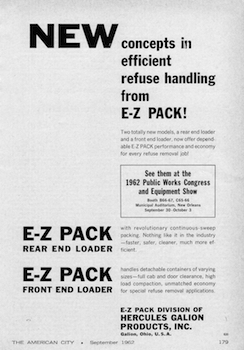
 E-Z Pack was poised for great success with the 1962 introduction of their advanced front-end loader, based on their popular Hydro E-Z Pack side loader. Perhaps as an attempt to quickly expand their market share, their first rear loader would come in the form of an all-new concept from a French inventor. The SRL-20 rear loader made its debut (along with the new front loader) on September 30, 1962 at the Public Works Congress and Equipment Show in New Orleans.
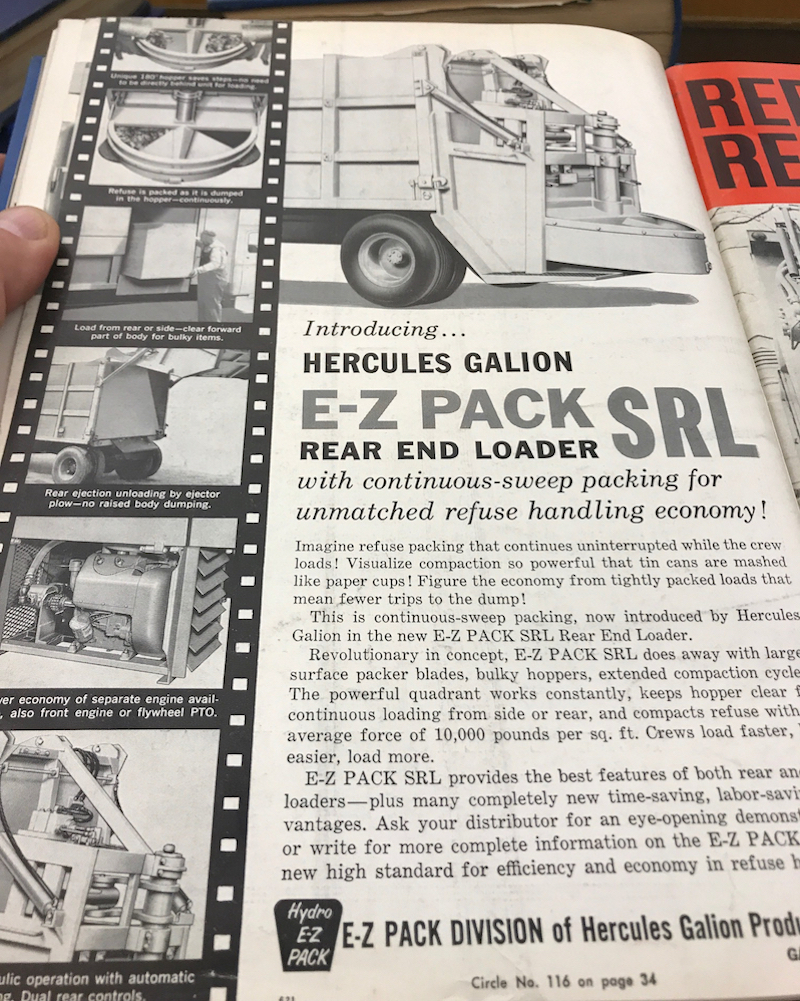
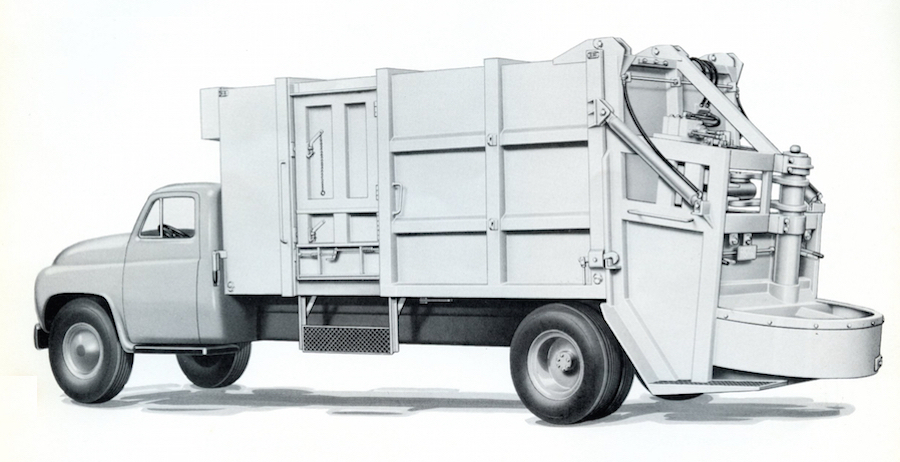
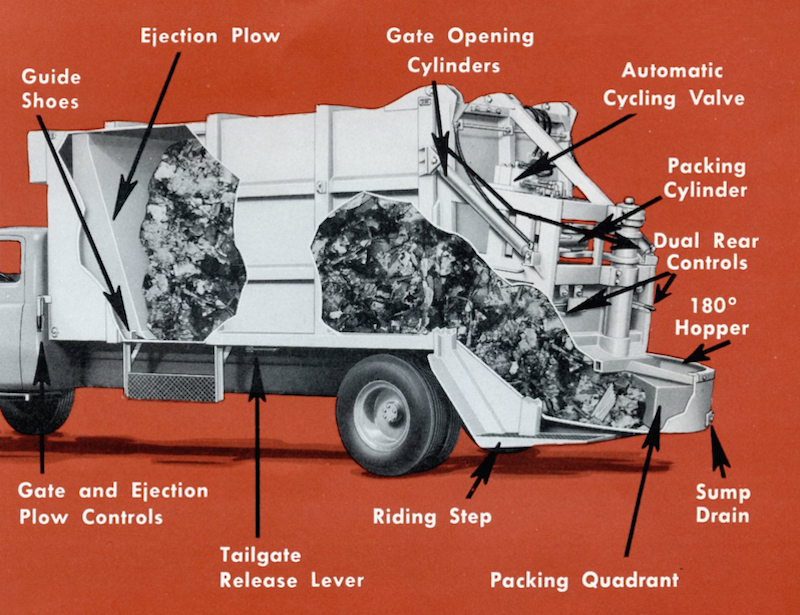
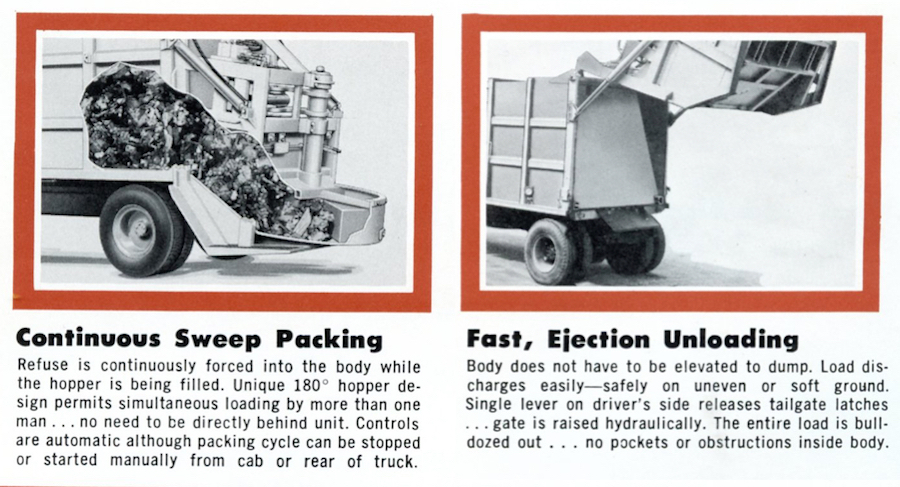
Like the front loader, The SRL-20 was largely built around the existing side loader model, in 20-yard form, with the addition of packer tailgate grafted on the where the end gate would have been. The packer was unlike any ever seen, in the USA or anywhere else. It featured a shallow, low-slung semi-circular trough which was continuously swept by a reciprocating blade. The "paddle packer" blade would swing 180-degrees in one direction, and then reverse course and swing through the complete arc in the opposite direction. A single hydraulic cylinder operated the blade via a pivot shaft, and through sequencing valves, it operated continuously. Thus, refuse could be loaded continuously, as fast as the crews could work and the blade could digest it.
Ejection of the load was accomplished with a dozer blade, powered by a telescopic cylinder. While able to easily compact loose household refuse, the hopper passages were too restrictive for bulky objects. A side-loading door was provided or this purpose, but was likely considered impractical. This was especially true when compared to competitors such as the Leach Packmaster, which could simply crush large objects with its packer blade. This, along with a small loading hopper, probably explain why the SRL-20 quickly vanished from the E-Z Pack lineup, being replaced with a veritable clone of the Packmaster.
Despite the failure of the SRL-20, the French design would have huge historical significance. Versions built in Europe (primarily by SITA) were widely popular, and were sold as late as the 1980s. These had the same drawbacks as the SRL-20, but did a better job by enclosing the packer, keeping un-digested refuse in the hopper until the blade could completely clear it. In the mid-1970s, Marc Stragier adapted the design to his automated side loaders, and the "Swinger" packer become a mainstay of ASL design. It is still in production to this day on the Heil Rapid Ral/STARR series of bodies.
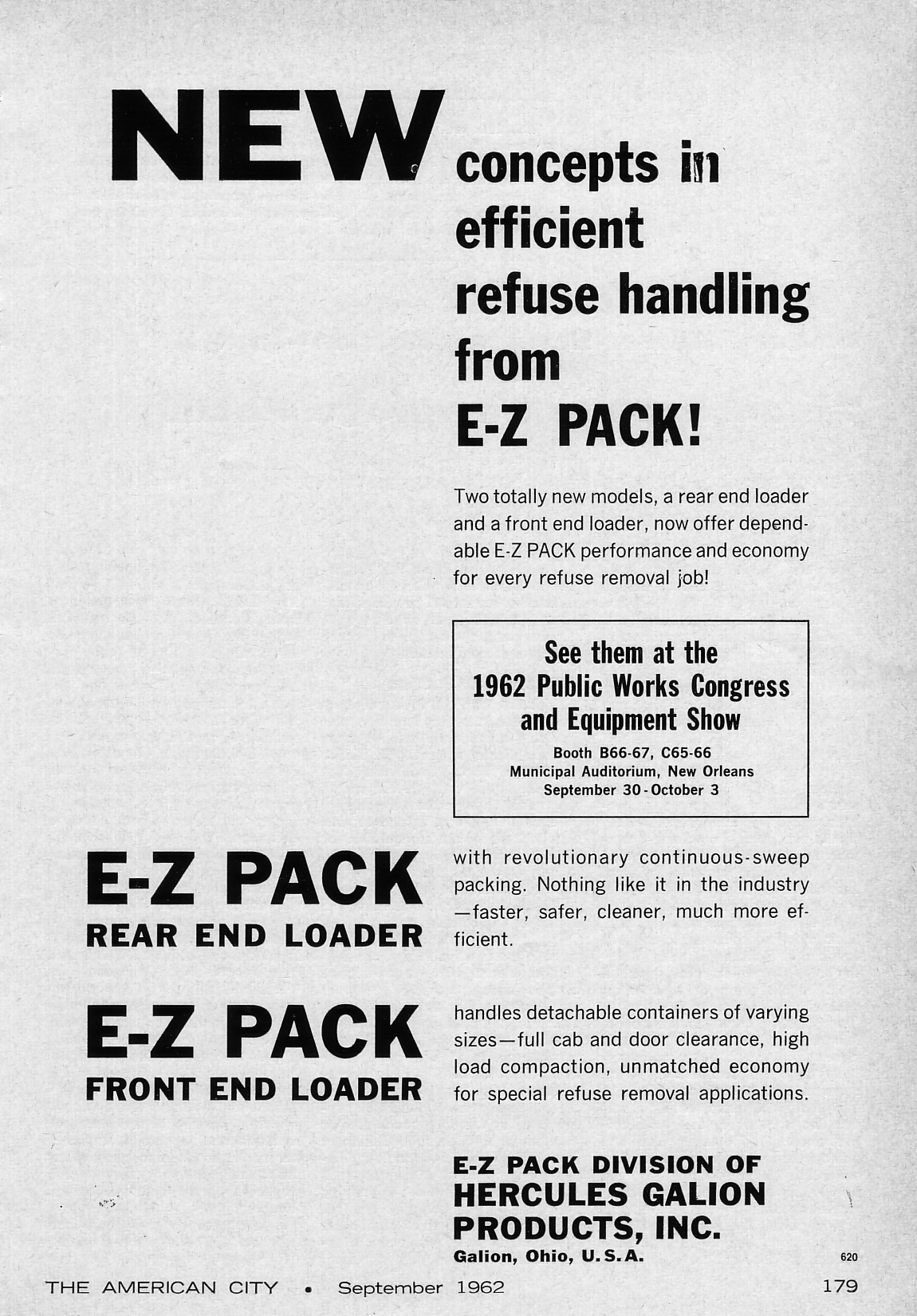
Below left: The September, 1962 advertisement announcing the debut of the E-Z Pack rear-end and front-end loaders at the APWA Congress in New Orleans, Louisiana.
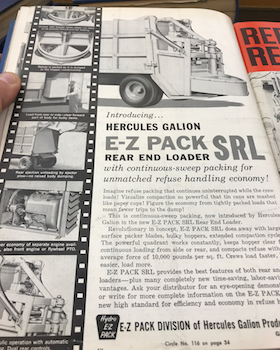
Below Right: A very rare trade ad for the SRL rear loader, probably from late 1962.
Click on images to enlarge in a new window
|
SELECTED PATENTS
|
Patent # |
Description |
Inventor |
Assignee |
Date |
|
US3220577A |
Material-handling apparatus, especially a refuse collector |
Laverne |
SITA |
December 5, 1962 |



2/9/19
© 2019
All Rights Reserved
Photos from factory brochures/advertisements except as noted
Logos shown are the trademarks of respective manufacturers
|
|
| |