 
Lodal
Norway and Kingsford, Michigan
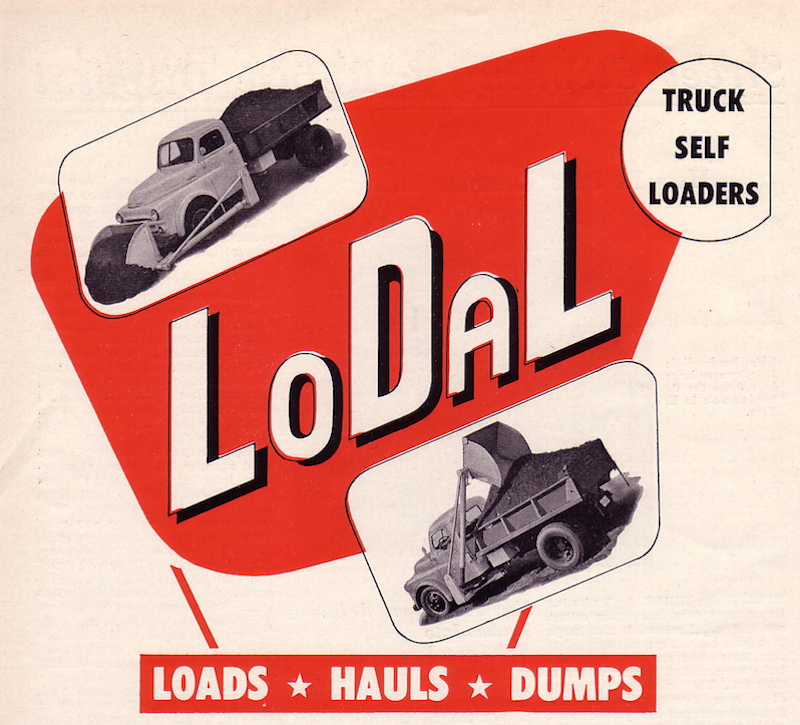
Lodal holds the distinction of being the oldest refuse truck manufacturer under continuous, family-owned operation in the United States. Brothers John, Leslie and Walter Brisson developed a general purpose truck loader bucket in 1949, which was called the Lodal Truck Loader, manufactured by Brisson Brothers machine Company of Norway, Michigan. By no means the very first of its kind, the Lodal was nevertheless unique in its design, incorporating the lift cylinders as part of the arms, working in conjunction with radius rods. From a forward loading position, the arms could be raised ninety degrees over the truck, and then travel "over center" and continue back over the body, and (if desired) all the way to the rear of the truck. The cylinder-radius rod arrangement eliminated the need for bulky arm structures, and delivered maximum lift at ground level, and faster travel in the elevated position.
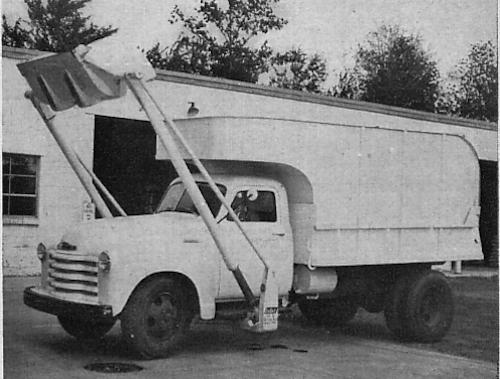
1952 Chevrolet with an early Lodal truck loader for rubbish removal
In 1953, the company name was changed to Lodal Inc., and their truck loader was being advertised for general purpose uses such as dirt, leaf and snow removal, as well as for garbage and refuse, with the use of a high-sided truck body. Although the truck loader would always remain a staple product of Lodal, the late 1950s saw the company moving more towards the burgeoning detachable-container refuse collection field. In 1957, John Brisson filed a patent for what is today know as the Lodal Triangle, an ingenious method of coupling the loader frame to a metal refuse container. Unlike conventional fork-type couplers which had dominated the industry, the triangle couple could hook-up from wide angles, allowing the operator to connect with mis-placed or hard-to-reach containers.
In late 1959, Lodal fielded their first complete front loader package, marketed as the Load-a-Matic system, consisting of a Lodal Grapple-Tilt loader arm with triangle coupler, and Lodal detachable refuse containers (1 through 4 yards capacity) paired with a modified Hydro E-Z Pack compaction body. Thus, Lodal became the second "Eastern" manufacturer to dive into the front-load container market, following Dempster in 1956. This early hybrid was an effective and affordable solution for municipalities just entering the container age, and was completely immune from Dempster's patents. It would become the foundation for even more advances from the upstart independent in the 1960s.
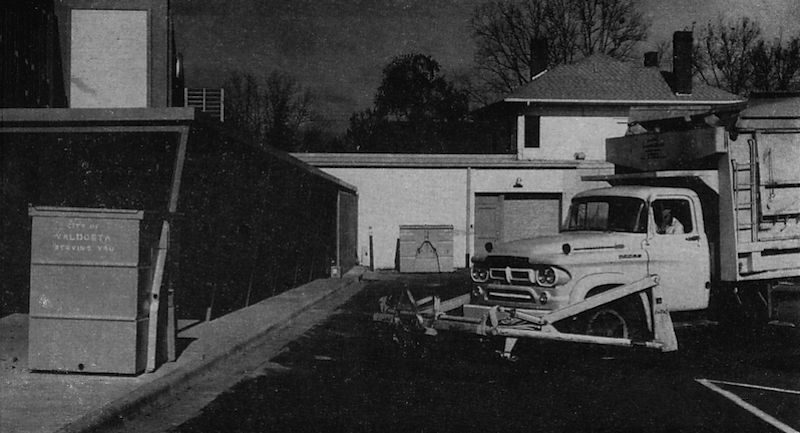
1959 Lodal Load-a-Matic approaches container; angled approach was possible thanks to unique triangle coupler.
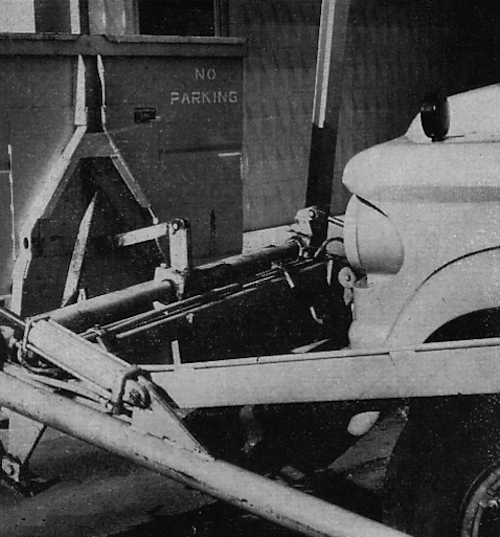
Patented triangle couple easily finds the target
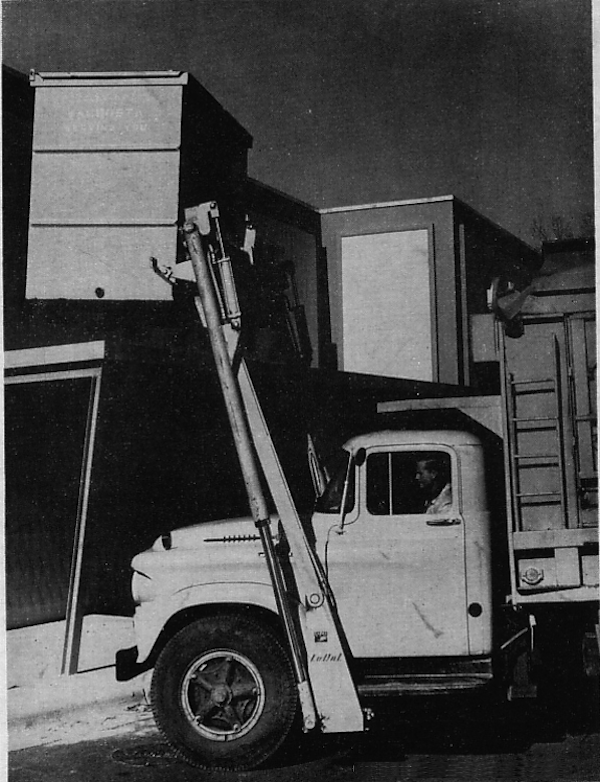
Container is raised high over cab, triangle holds container by gravity, small tilt cylinders keep it level
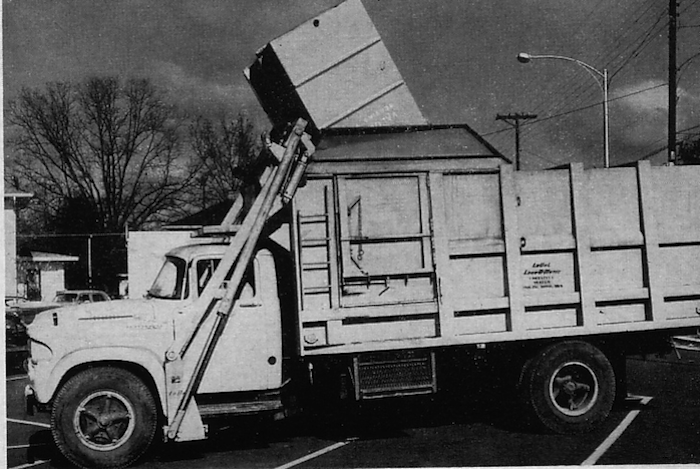
Container is moved over top of 20-yard Hydro E-Z Pack body and dumped, auto-locking lugs hold it fast to triangle
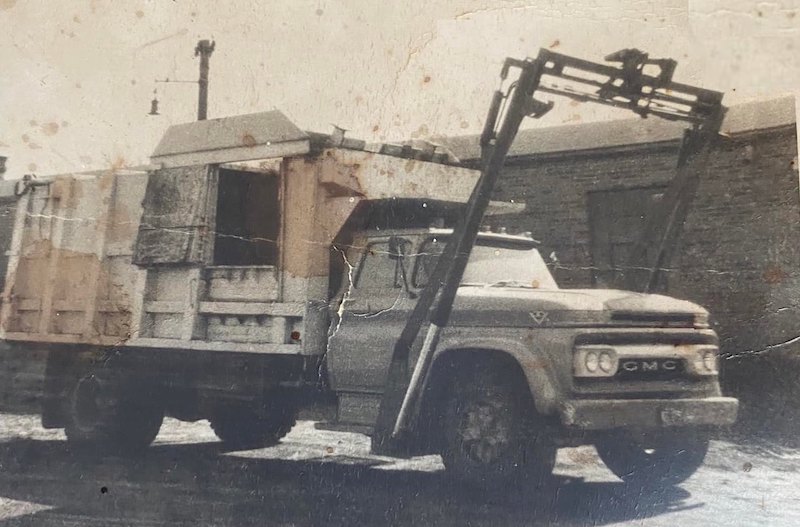
Well-worn GMC with E-Z Pack body and Lodal lift arms
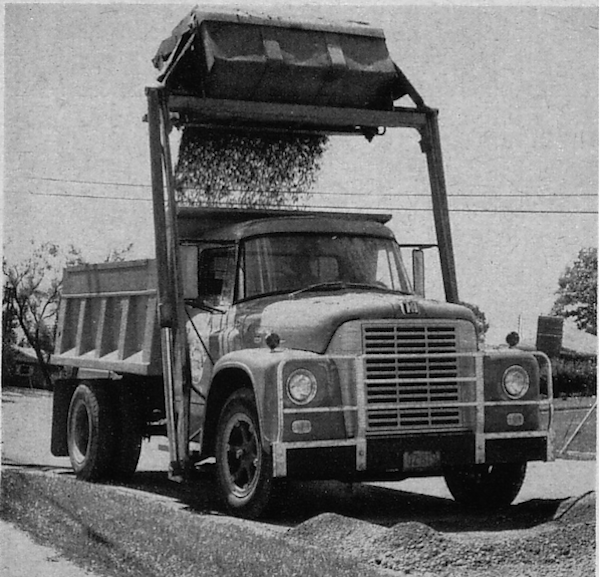
International Loadstar with Lodal Grapple-Tilt general-purpose truck loader
SELECTED PATENTS
|
Patent # |
Description |
Inventor |
Assignee |
Date |
|
US2643011 |
Front or rear-end truck loader |
Brisson, et.al. |
|
May 10, 1950 |
|
US3016157 |
Loader apparatus |
Brisson |
Lodal Inc. |
December 19, 1957 |
|
US2979215 |
Loader bucket and grapple apparatus |
Brisson |
Lodal Inc. |
December 19, 1957 |



10/29/16
© 2016
All Rights Reserved
Photos from factory brochures/advertisements except as noted
Logos shown are the trademarks of respective manufacturers
|
|
| |